- Typology
- Work
- Project
- Maison du Miel XXX
- year
- 2026
- Location
- Campus Agroscope Posieux
- Competition for a new Bee Research Center on Campus - Shortlisted.
- team c/o now
- Tobias Hönig, Andrijana Ivanda, Pola Koch, Markus Rampl, Paul Reinhardt, Sebastian Rothkopf, Duy An Tran, Ksenija Zdešar
- team out of office
- Lennart Grebe, Dominik Aberle, Matthias Walbröl, Joelle Klein
- structural engineering
- HHT Bauingenieure Ingenieurgemeinschaft GbR; Gerd Thieroff
 XXX
XXX
Fig.___© c/o now
 XXX
XXX
Fig.___© c/o now
 XXX
XXX
Fig.___© c/o now
Jury Report
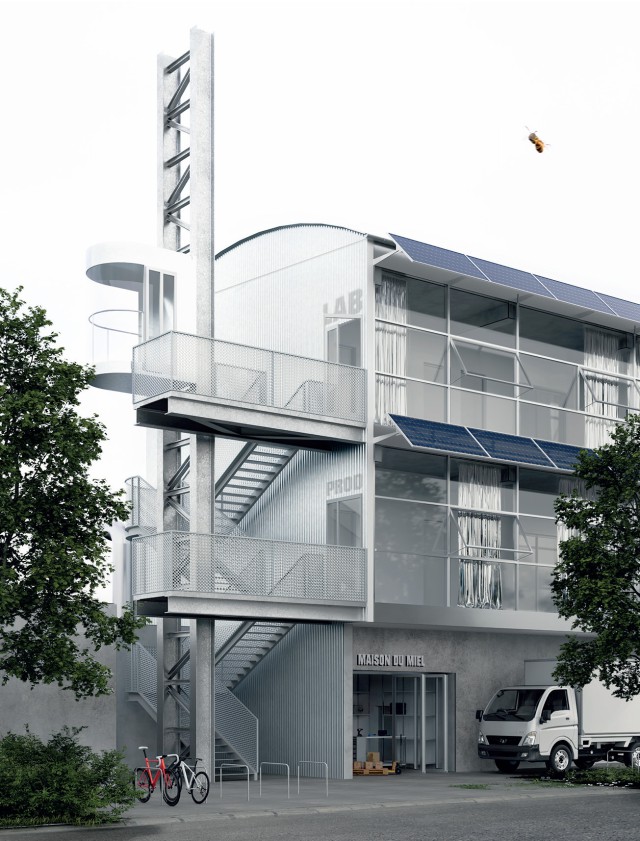
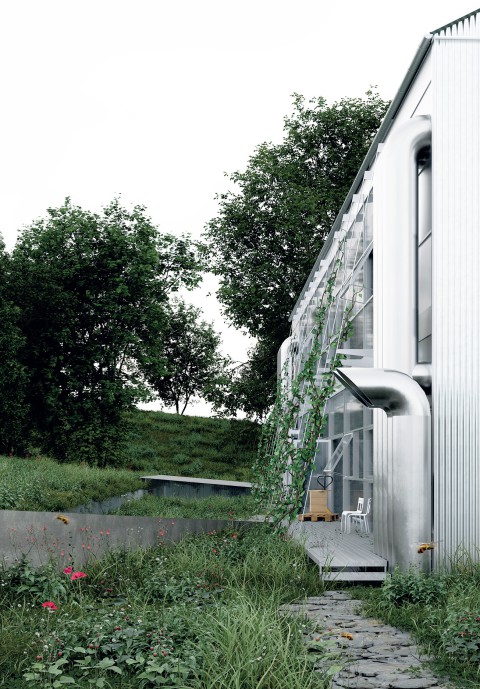
The designers propose a slender, elongated structure positioned parallel to the traffic axis on the existing retaining wall, with a slight cantilever. Through this layout, the project maximizes the land reserve to benefit biodiversity. The design seeks to engage with the research typology of the Posieux campus through an almost container-like, industrial aesthetic and conceives of itself as an efficient “production machine.” The structure cleverly uses the existing offset of the retaining wall as an anchor point and defines a staggered entrance arrangement. While the access tower emphasizes the building’s identity, the two flanking, open steel stair towers raise urban planning questions due to their exposed nature—particularly toward the wash area. The facade is designed as an intelligent layered system: a technical level with exposed cabling, a greening layer, and PV modules serving as brise-soleil give the building a technical yet vibrant aesthetic.
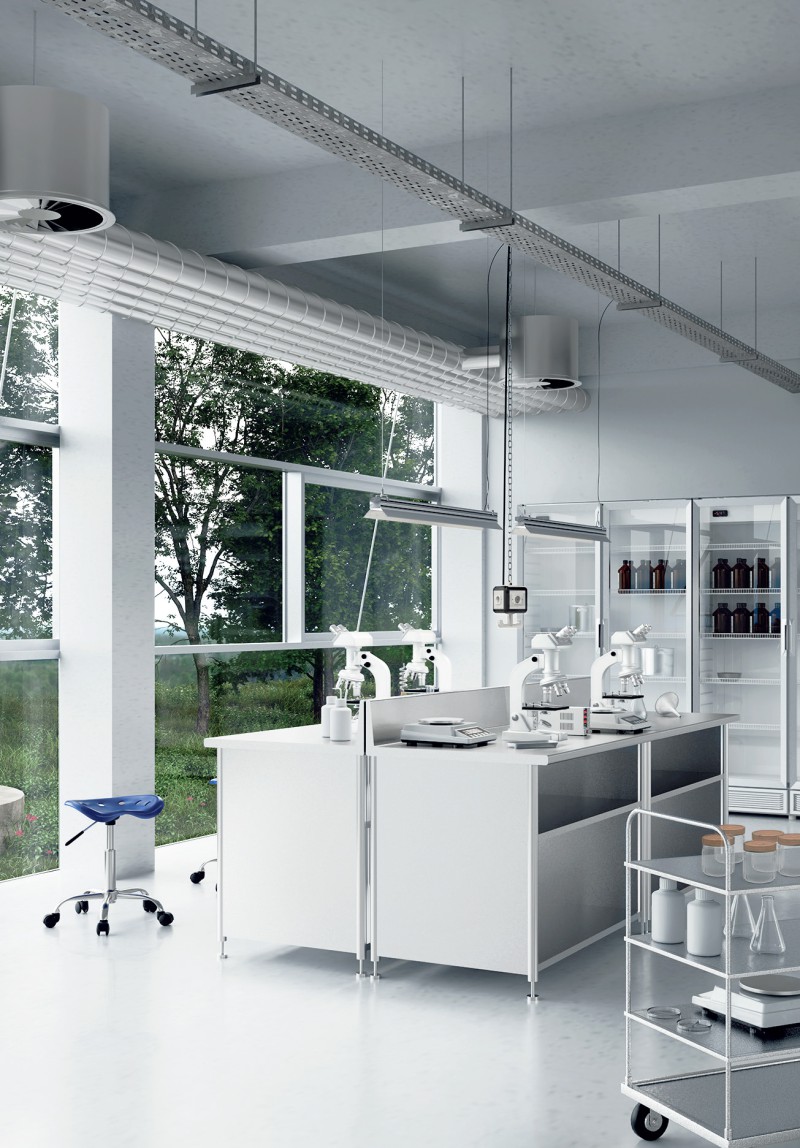
The interior layout distributes the functions across three floors. On the ground floor, the storage area and workshop are arranged for easy access, and there is a general effort to separate “clean” and “dirty” areas. Honey production is located on the first floor with direct access to the pasture and the observation apiary. Despite these approaches, the functional layout has serious shortcomings in detail. A key shortcoming is the goods elevator, which ends on the first floor, thereby cutting off the laboratories on the second floor from logistics. Furthermore, wax production is inconveniently located on the first floor, which complicates the transport of dirty materials. Another critical issue is that material routes pass through the glass-enclosed hallway, which risk of bees entering the building. The quality of the workspaces is also criticized: instead of a full-fledged office, only niches are planned in the unheated access corridor. Since this corridor poses a risk of overheating in summer and is cool in winter, room doors must remain systematically closed, which hinders communication. The project is characterized by a concept of expandability and cyclical construction (demountable lightweight roof, pre-structured access tower). The simple skeletal structure promises high flexibility.
However, the approach to the site appears contradictory: Although the goal is to be non-invasive, the narrow ground floor requires significant excavation work. The choice of materials for the façade and the lack of specific references to local or recycled building materials are also subject to criticism. Aspects of rainwater harvesting (sponge city) also remain vague. In summary, the “Maison du Miel” is a conceptually strong entry that impresses with its radical approach, innovative facade layering, and sensitive treatment of the land reserve. The robust workshop atmosphere promises a high degree of adaptability. Unfortunately, the design fails to overcome significant functional hurdles: The lack of elevator access to the laboratory level and the exclusively external access call into question its operational viability. Furthermore, the scale of the container architecture — particularly with regard to a potential three-story addition atop the prominent retaining wall — is deemed inappropriate for the site.
Decision: Shortlisted.